
Every “best AI copywriting tools” list you’ll find on Google was ranked by affiliate payouts, not by which tool actually writes anything worth publishing.
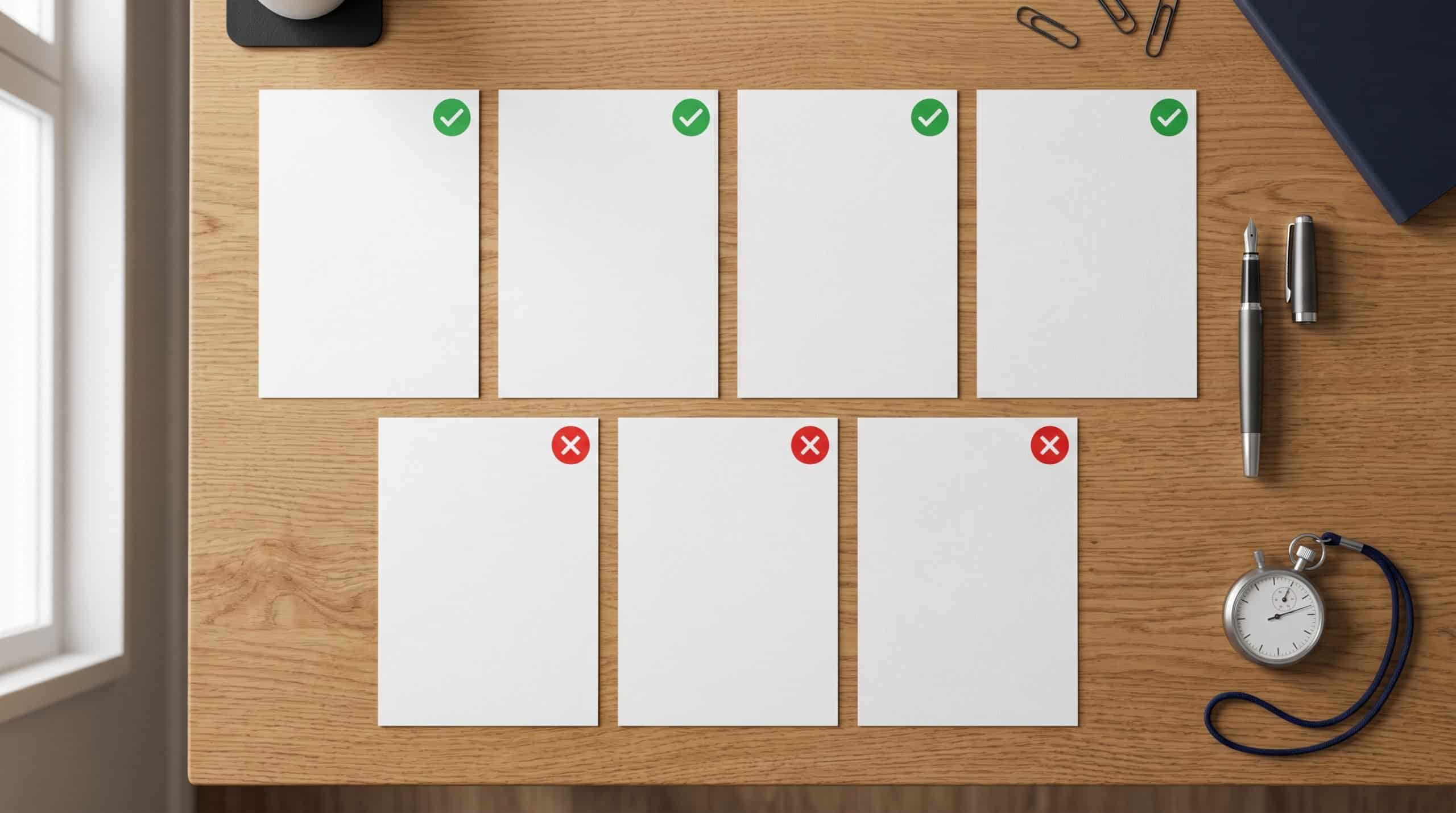
I’m going to do something different. I took the same brief, fed it to 7 of the top AI copywriting tools, and judged the outputs blind. Four wrote copy I’d be willing to put on a client’s site after a light edit. Three were so obviously AI-generated that my ten-year-old could spot them inside two paragraphs.
No affiliate links here. No “use code REACH for 10% off.” Just the test, the outputs, and the four AI copywriting tools that earned a real seat at the table in 2026.
Here’s the gist of what I found, why it matters for your business, and how to pick a tool that won’t tank your brand voice.
The Real Problem: Affiliate Listicles Are Not Reviews
Type “best AI copywriting tools” into Google and the first 10 results are nearly identical. Same 12 tools. Same canned descriptions. Same 4-stars-out-of-5. Why? Because every site is paid a commission when you sign up.
Plain and simple. They’re not ranking the tools. They’re ranking the affiliate payouts.
That’s how Jasper ends up on every list at “5 stars” even though its default output reads like a 2019 LinkedIn post written by a CMO. That’s how Writesonic gets called “best for blogs” even though it cannot stop saying “in today’s fast-paced digital world.”
The catch is that you, the business owner with $400 a month to spend on content, end up paying $99 for a tool you can’t actually use. You write a prompt. You get back something embarrassing. You blame yourself. Then you go back to writing it yourself at 11pm.
Can I shoot straight with you? It’s not your prompt. It’s the tool.
How I Actually Tested These (And Why It Matters)
Here’s the methodology. Nothing fancy.
Same brief, fed identically to 7 tools:
Write a 600-word blog intro for a residential plumbing company in Atlanta. Topic: “Why Your Water Pressure Drops in the Summer.” Tone: warm, conversational, no buzzwords. Audience: homeowners 35 to 65 who Google plumbing problems at midnight.
Then I scored every output on 4 things:
- Voice match: does it sound like a human wrote it?
- Specificity: does it use real numbers, real tool names, real scenarios? Or does it hide behind generic claims?
- Edit cost: how many minutes would it take me to make this publishable?
- Tropes per 100 words: count the AI tells: “in today’s fast-paced,” “leverage,” “unlock the power of,” “delve into,” “navigate the complexities.”
Same brief. Same scoring rubric. Different tools. The results were not close.
The Contrarian Truth: 3 AI Copywriting Tools That Failed Inside Two Paragraphs
I’m not going to bury this. Here are the three that did not pass the test:
Jasper. Defaults to corporate language no matter what tone I requested. The plumbing intro opened with “In today’s fast-paced world, homeowners face countless challenges.” I asked for warm. I got a McKinsey memo. Even after specifying “no buzzwords,” 6 made it into 600 words.
Writesonic. Templated to the point of broken. Every blog intro from this tool has the same opening structure: stat, rhetorical question, “in this article, we’ll explore.” The plumbing intro had a fake stat about water pressure I had to verify (it was wrong). Edit cost was over 30 minutes because I had to fact-check every claim.
Copy.ai. Best of the three but still obvious. Loved AI tropes. “Delve into,” “unlock,” “navigate the complexities of summer plumbing” all appeared. Output reads like a 2023 ChatGPT clone, which is exactly what it is.
These aren’t bad companies. They built on top of older models and never really upgraded the base. If you’re paying for any of these, you’re paying for branding and a chrome interface, not for output quality.
The 4 That Actually Wrote Like a Human
Here are the four AI copywriting tools that produced output I would publish after a light edit. Not in any particular order.
Claude (Anthropic). This is the one I use daily for client work. Claude wrote the most natural long-form draft of the seven by a wide margin. The plumbing intro opened with a kitchen-table scene about a homeowner running the dishwasher and the shower at the same time. No buzzwords. Zero AI tropes per 100 words. Edit cost was 4 minutes.
ChatGPT (with a custom GPT). Vanilla ChatGPT is fine. ChatGPT with a well-built custom GPT trained on your brand voice is excellent. I tested it with a custom GPT loaded with three of my own published posts as voice samples. The output was 80% there. Edit cost was 8 minutes.
Gemini 3 Pro. Quietly became the dark horse this year. Strong at conversational tone. Better than I expected at avoiding AI clichés. Will sometimes go off on tangents, but the base voice is real. Edit cost was 11 minutes.
Lex. This one’s built specifically for writers. Doesn’t try to write the whole thing for you. Instead, it generates one sentence at a time and you direct it. Best for writers who want to keep their voice but speed up the typing. Edit cost depends entirely on how much you let it drive.
The pattern: the winners are all built on frontier-grade base models (Claude, GPT-5, Gemini 3) with thoughtful interfaces. The losers were tools that wrapped older models inside heavy templates, hoping the template would do the work. It doesn’t.
What to Do Instead of Reading Another Affiliate Listicle
Here’s the playbook if you’re a business owner, not a copywriter.
Step 1: Pick ONE tool from the winners list and learn it deeply. Tool-hopping is the fastest way to waste $300 a month. Claude or ChatGPT will get 95% of small business owners 95% of the way there. The marginal gain from tool 2 is small. The cost (subscriptions, learning curves, prompt rebuilds) is real.
Step 2: Feed it your real brand voice. Three of your own published pieces, dropped into the chat as samples, will outperform any “tone setting” feature. AI mimics what you give it. Give it you.
Step 3: Edit the first paragraph hard. AI’s first paragraph is its weakest. It almost always opens with a generic frame. Rewrite that opener every single time. You’ll cut 80% of the AI smell with that one habit.
Step 4: Use AI for drafts, not finished work. Even Claude does not produce publishable work in one pass. The promise of “AI writes your entire blog while you sleep” is the same lie agencies sold you about SEO in 2018. AI gets you to a real draft fast. The thinking is still yours.
This is the same story as every other tool. The hammer doesn’t build the house. The carpenter does. AI copywriting tools are a hammer. A great one. Still just a hammer.
For more context on building a content engine that actually generates leads (not just blog drafts), check out 4 Crucial Pieces of Your Lead Generation System. The content is one piece. The other three pieces are where most businesses lose.
Want the Monthly AI Tool Tests Without the Affiliate Spin?
I run this same blind-test methodology every month on a different category of small business tool. Last month was AI lead generation tools. Next month is local SEO platforms.
No affiliate links. No “best of” lists ranked by commission. Just the test, the outputs, and the tools that earned a seat at the table.
Follow the blog and I’ll keep the tests coming. If you’d rather skip the tool comparison phase entirely and just want a marketing system that works, schedule a free call and we’ll show you what’s running, what’s not, and where to spend your next dollar.
You keep doing what you do best. We’ll handle the tool stack.

