
Can I shoot straight with you? Every service business owner asks some version of the same question eventually: do lead generation companies actually work, or are they a scam wearing a nice landing page? Here’s the honest answer: it depends on whether you’re buying an exclusive lead or a shared one, and most of what gets sold as “lead generation” today is the shared kind, resold to four or five competitors in your market, all racing to call back the same homeowner first. That’s not a marketing strategy. That’s a bidding war you didn’t know you entered.
But here’s the other half of the truth the “never buy leads” crowd conveniently skips: there are real situations where buying leads is the right move. This is the math to run before you hand anyone a credit card number, including us. We’re not neutral here. We sell an owned lead system, not shared leads, so take the pitch with that grain of salt. But the math below is the same math we’d run for our own clients before they spend a dollar on any outside lead source, ours or anyone else’s.
The Real Problem: You’re Not Buying a Lead, You’re Buying a Race
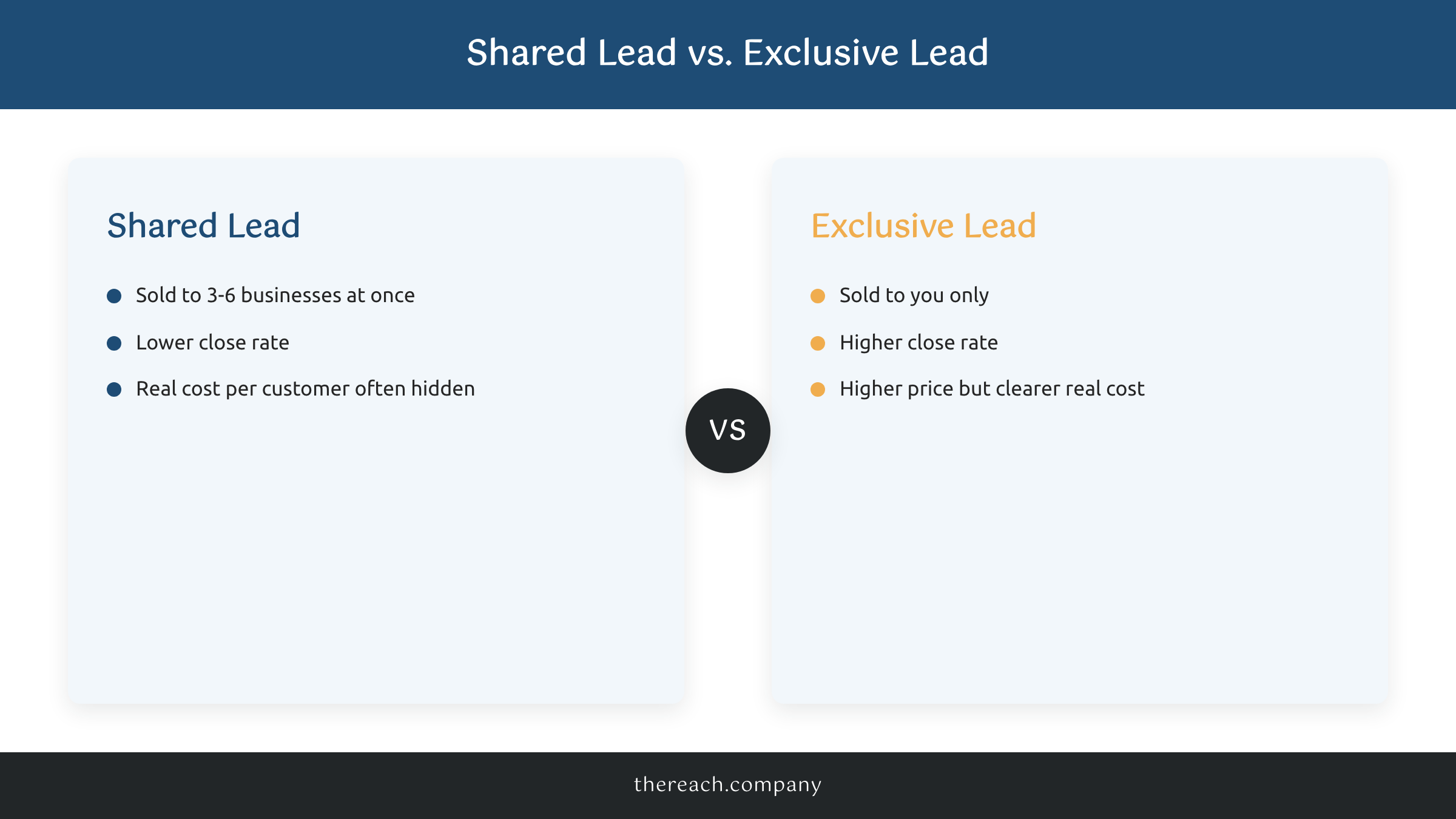
There are two kinds of leads for sale: exclusive and shared. An exclusive lead means you’re the only business that gets that homeowner’s contact information. A shared lead means the exact same inquiry gets sold to three, four, sometimes six competitors in your service area at the same moment.
Guess which one is cheaper. Guess which one is the one most lead generation companies are actually selling you.
Shared leads look like a bargain on a per-lead basis, until you do the math on close rate. If five contractors get the same lead and only one of you lands the job, your real cost per customer isn’t the $25 or $40 you paid for the lead. It’s that number multiplied by however many leads it actually takes you to close one, and that climbs fast when you’re competing against four other businesses who got the same phone number thirty seconds before you did.
That’s the part the sales rep on the phone won’t walk you through. They’ll quote you a low cost per lead. They will not quote you your real cost per customer. Depending on the trade, we’ve seen shared leads run anywhere from a few dollars to well over a hundred, with home service and legal categories on the expensive end. The price tag isn’t the tell. The tell is whether the company selling it will tell you, before you pay, exactly how many other businesses are getting that same inquiry.
The Speed Problem Makes It Worse
Here’s what separates the businesses who make shared leads work from the ones who burn money on them: speed. When five businesses get the same lead at once, the job almost always goes to whoever calls back first. HubSpot’s own research on lead management is blunt about it: sales teams need to contact a new lead within five minutes of submission to have a real shot at converting them (blog.hubspot.com/sales/lead-management). Wait an hour, and you’ve already lost, whether that lead was exclusive or shared.
Most small businesses can’t hit a five-minute window consistently. You’re on a roof, in a treatment room, on another call with a different customer. If you’re buying shared leads and you don’t have something automatically firing off a text or a call attempt the second that lead lands, you’re not just competing on price anymore. You’re competing on a stopwatch you’ve already lost.
This is exactly the kind of gap automation closes. A missed-call text-back, an instant email, a call routed straight to whoever’s available, none of it requires you to sit by the phone all day. It just requires you to have the system built before the lead shows up, not scrambled together after.
The Contrarian Truth: Sometimes Buying Leads Is the Right Call
Here’s the part the “never pay for leads” crowd won’t tell you. None of this means lead generation companies are a scam by default. Plenty of legitimate businesses sell real inquiries. The problem is usually in how the pricing and exclusivity terms get buried until after you’ve signed. There are real situations where buying leads still makes sense:
- You’re brand new with zero pipeline and need cash flow now, not in six months when your SEO starts working.
- You’re testing a new service line or a new city and want real data before you invest in a full local SEO or ad build.
- You already have the sales process and the speed-to-lead system to win the race above, and the math still works even at a lower close rate.
If you can close at 10 to 15% on shared leads and your average job value covers the acquisition cost with room to spare, buying leads can bridge a real gap while you build something you own. The mistake isn’t buying leads occasionally. The mistake is building your entire pipeline on rented traffic you don’t control, can’t improve, and lose the moment you stop paying.
What We’ve Seen Work Instead
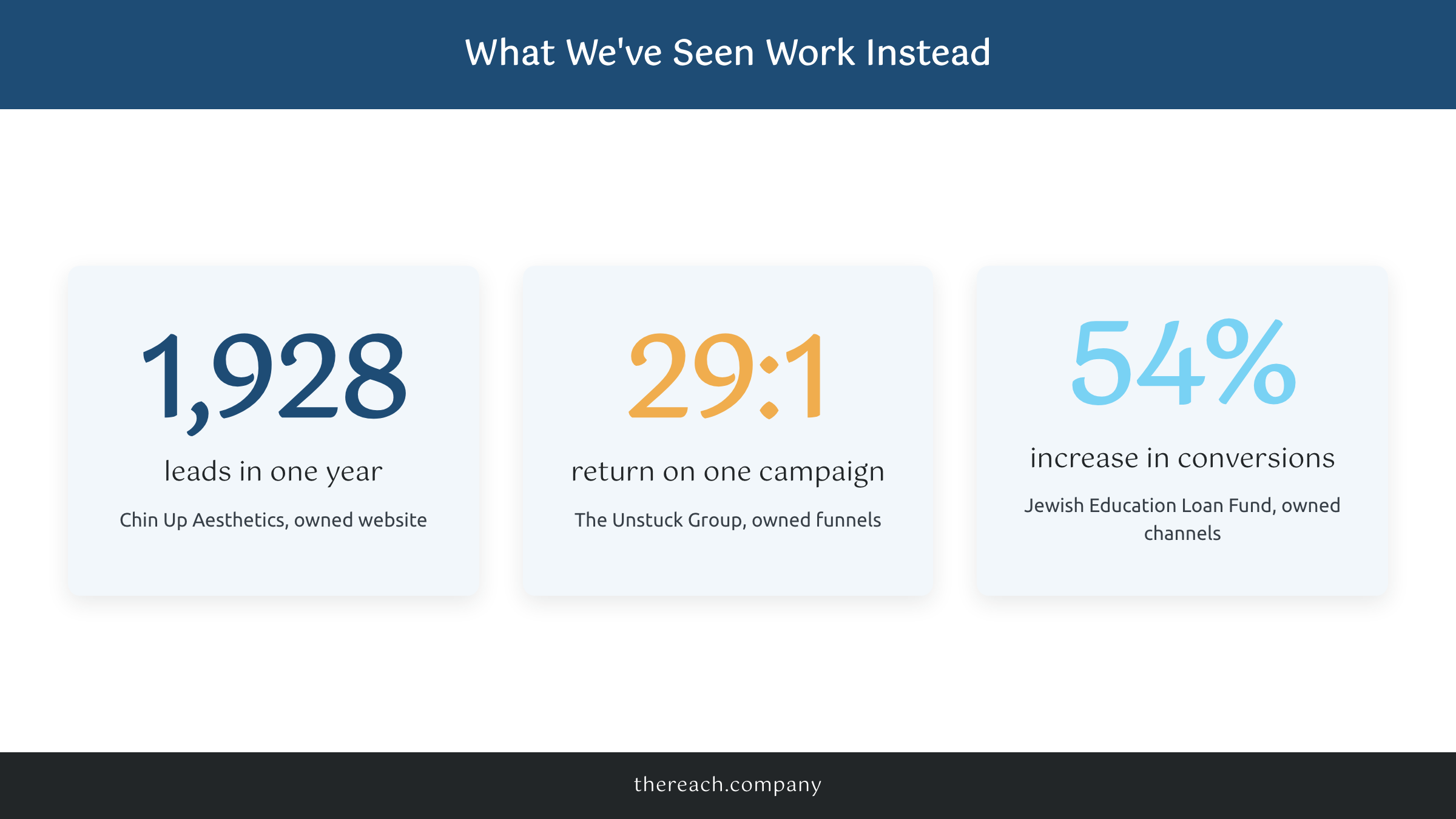
Chin Up Aesthetics, a medspa client of ours, generated 1,928 leads from their own website in a single year and holds the #1 Map Pack position for eight-plus services in their market. None of those leads were shared with the medspa down the street. Every one of them came through a system Chin Up owns outright: their website, their Google Business Profile, their ad accounts.
The Unstuck Group saw a 29:1 return on one Facebook campaign and a 14:1 average ROAS on Google, run through funnels they own, not a shared lead marketplace. The Jewish Education Loan Fund, a five-year client, has seen a 54% increase in conversions and a 38% increase in traffic year over year, again through channels they control end to end. That’s the real difference between renting attention and owning it. Bought leads can work as a bridge. They rarely work as a foundation.
The Math to Run Before You Pay Anyone for Leads
Before you sign up with any lead generation company, run this math first:
- Ask if the lead is exclusive or shared, in writing, not just on the sales call.
- Calculate your real cost per customer, not cost per lead. Divide the lead cost by your actual close rate on that specific source, not your close rate on referrals.
- Check your speed-to-lead capability. If you can’t respond inside five minutes, don’t buy shared leads. You’ll just be subsidizing a competitor who can.
- Compare it to owning the channel. What would that same monthly spend do inside an integrated lead system, one where your website converts, your SEO brings in intent-driven traffic, and your ads amplify what’s already working, instead of renting a slice of somebody else’s list?
That last comparison is the one most business owners skip. We built The Reach Co Lead System around exactly this problem: website, SEO, and ads working together so you own every lead that comes in, instead of splitting it with whoever outbid you by five dollars on the same zip code. If you want a system built around your business instead of a shared marketplace, that’s what our Lead Generation System does, GoHighLevel-powered, fully yours, with nobody reselling your inquiries to the guy down the street.
Buying leads isn’t inherently dumb, and lead generation companies aren’t inherently a scam. It depends on whether you’re using one as a bridge to something you own or as a permanent substitute for it. Run the math above before your next call with a lead vendor. If the numbers don’t work, or you’re tired of splitting every inquiry with three other businesses in your market, we’d rather show you what owning the system looks like. You got this, even if it means asking harder questions than the rep on the phone expects.

