
Search "marketing ideas for small service business" and you get a listicle with 50 tactics. Start a podcast. Run a referral contest. Post three Reels a day. Buy a billboard. Build your personal brand. By tactic number eight you are overwhelmed, and by tactic fifty you have done exactly nothing.
Here is the rub. You do not need 50 ideas. You need the four or five that actually book work, in the right order, done well. A plumber does not need a TikTok strategy before his Google Business Profile is even claimed.
So let's skip the brainstorm dump. This is the short list of marketing moves that bring in real work for a small service business, ranked by what pays off fastest. No fluff, no "build a content engine" homework. Just the moves that fill next week's calendar, and the order to do them in.
The Real Problem: Why Most "Marketing Ideas" Lists Don't Bring In Work
Most marketing-ideas lists are written to be long, not useful. Fifty bullet points rank well on Google and look impressive on the page. They also treat a one-truck HVAC company and a venture-backed software brand like they need the same playbook. They don't.
A small service business has two things working against it: no time and no spare cash to waste. You are running jobs all day. You cannot test 50 things, and you cannot afford to throw $2,000 at a tactic to find out it was a dud. Every hour and every dollar you put into marketing has to come back as booked work, or it was a hobby with a logo.
That changes the whole question. It is not "what could I do?" It is "what brings in work the fastest for the least money?" Once you ask it that way, 50 ideas collapse fast. Strip the listicles down to what actually moves the needle and the real marketing ideas for small service business owners come down to about five. The rest are either too slow, too expensive, or built for businesses that aren't yours.
The Marketing Ideas That Actually Book Work (Ranked by Payoff)
Here they are, fastest payoff first. Do them in this order, not all at once.
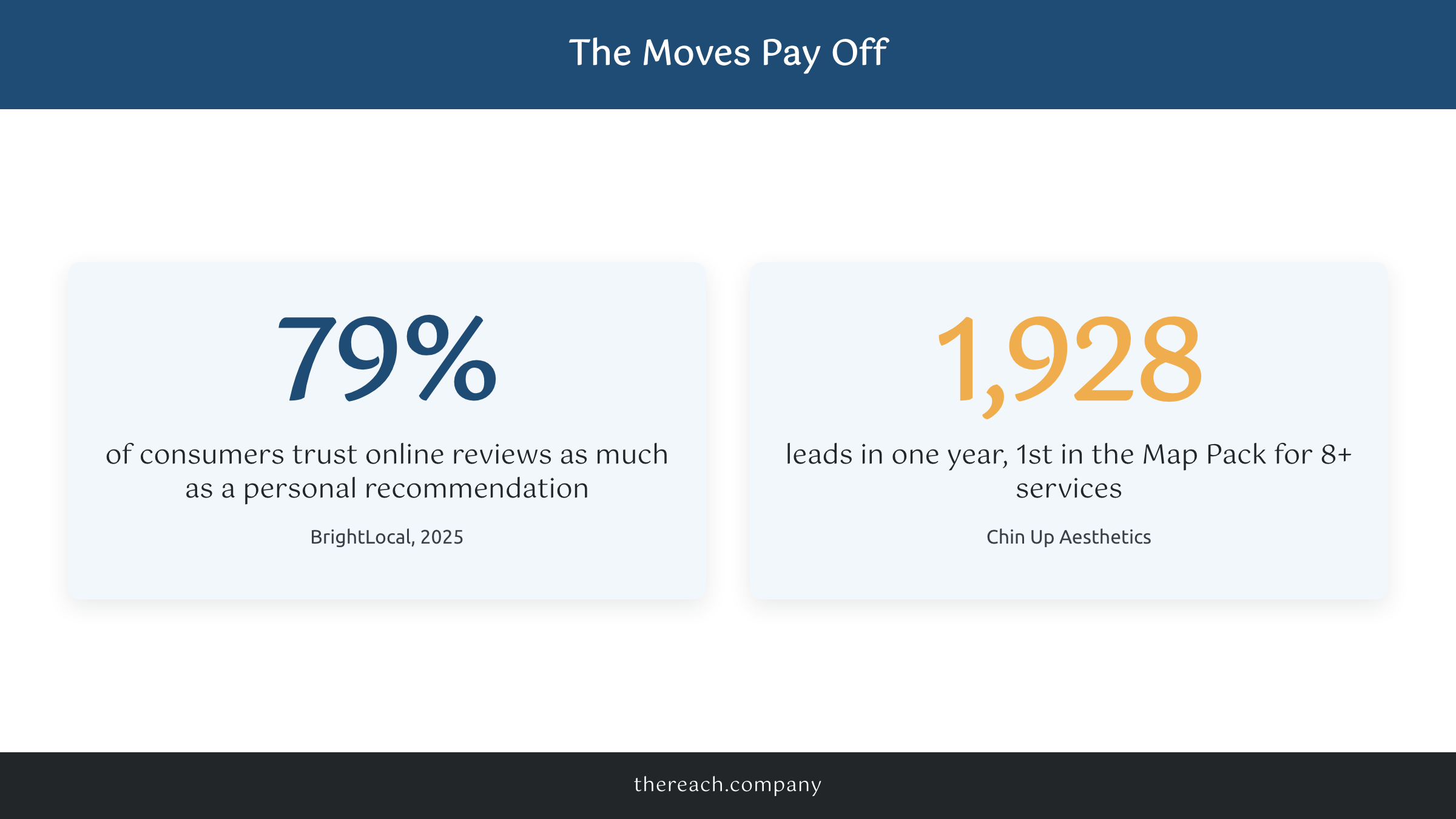
1. Claim and load up your Google Business Profile. This is the cheapest, fastest move there is, and most owners half-do it. For a local service business, your Google Business Profile is the front door. BrightLocal's 2025 Local Consumer Review Survey found that 79% of consumers trust online reviews as much as a personal recommendation. That means your profile, with its reviews and photos and hours, is doing the convincing before a human ever talks to you. Fill out every field. Add real photos of real jobs, not stock images. Pick the right categories. This can start bringing calls in a couple of weeks, not a couple of quarters.
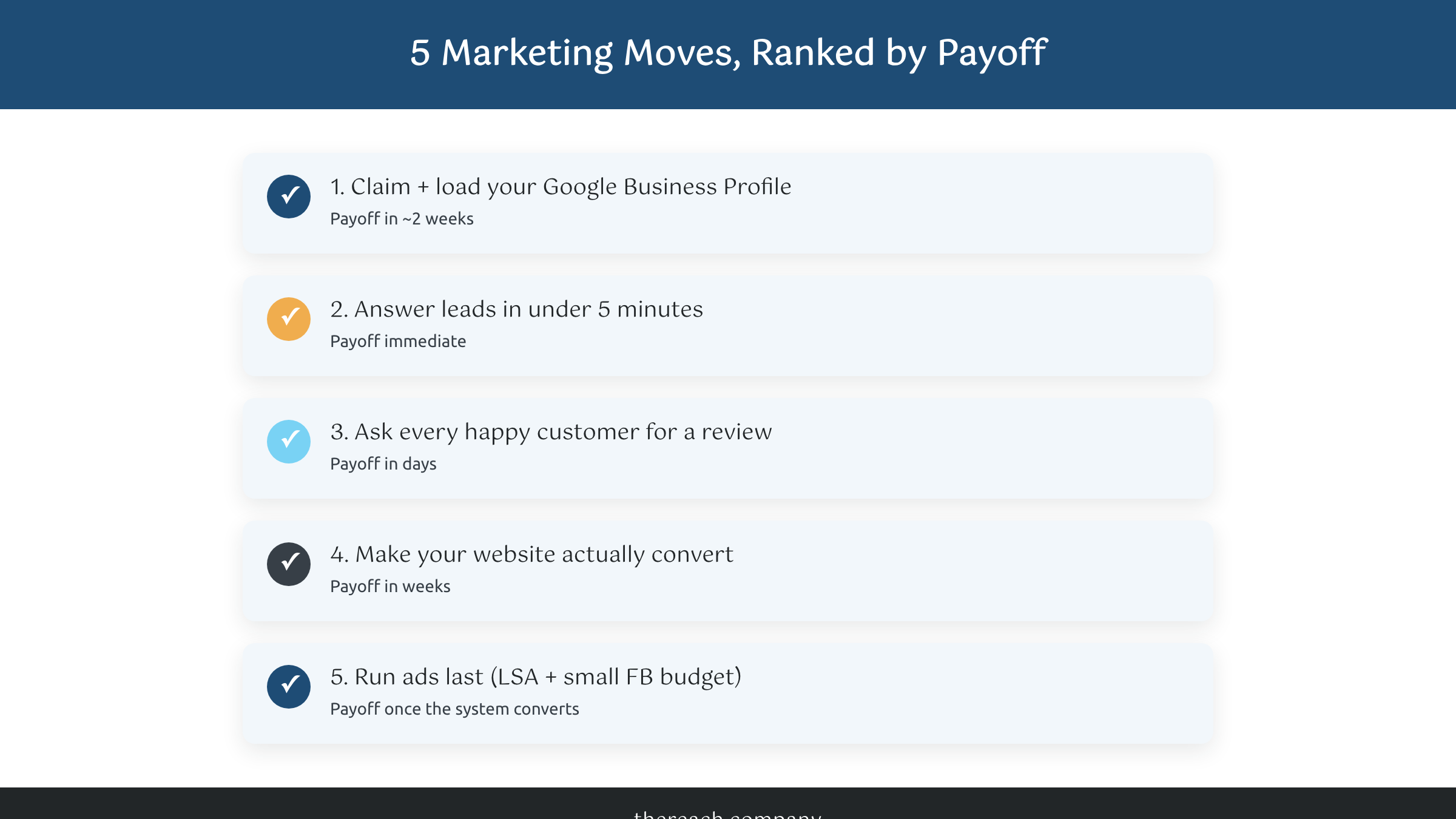
2. Answer leads faster than anyone else. Speed is a marketing idea, even though it does not feel like one. Most service businesses lose work not because they are bad at the job, but because they call back two days later. The owner who replies in five minutes wins the job the other three lost by being slow. A simple GoHighLevel auto-text the second a form comes in, then a real call inside the hour, beats almost any ad you could run. You already paid to get that lead. Don't let it go cold on the kitchen counter.
3. Ask every happy customer for a review. You already did the hard part: great work. The review is the easy part most owners skip. Reviews feed the Google Business Profile from move one, and they cost you nothing. One short text after the job, with a direct review link, turns a finished job into your next three leads. Ask every single time and it compounds.
4. Make your website actually convert. Not a pretty brochure you feel vaguely proud of. A page that loads in under three seconds (WP Rocket helps), says who you help in plain language, and makes booking a call dead simple. A slow, vague site quietly kills the leads your other moves worked so hard to create. The website is where interest turns into a booked job, or doesn't.
5. Then, and only then, run ads. Ads are an amplifier, not an engine. Google Local Services Ads and a small Facebook budget can pour fuel on a system that already converts. Run them first, on a leaky system, and you are paying good money to send strangers to a door that doesn't open. Get moves one through four working, then turn ads on and watch them actually pay.
The Part Nobody Ranks: Order Beats Ideas
Here is the contrarian truth. The ideas above are not secret. You have heard most of them. What kills small businesses is not a shortage of ideas, it is doing them in the wrong order, or trying to do all of them at once in a panic.
Running ads before your website converts is like flooring the gas with the parking brake on. You burn fuel and go nowhere. Posting on social every day before your Google Business Profile is even claimed is decorating a house that has no front door. The order is the strategy. The sequence is what makes the same five ideas work for one owner and flop for another.
That is why a list of ideas is never enough on its own. You need a simple marketing plan that says what you do first, what you do second, and how you will know it worked. Five moves in the right sequence will outwork twenty moves done at random, every time. Plain and simple.
What This Looks Like When It Works
We run this exact order for service clients, and the numbers hold up. Chin Up Aesthetics, a medspa, pulled 1,928 leads from their website in a single year and now sits first in the Google Map Pack for 8 or more of their core services. That did not come from chasing 50 tactics. It came from the front door (Google), the fast follow-up, the steady stream of reviews, and a site built to convert, with ads layered on top once the rest was working.
The Jewish Education Loan Fund, a client of close to five years, saw a 54% jump in conversions by tightening the same machine, not by bolting on new channels. Let that sink in. They grew by doing the core moves better, not by adding more. A few moves, done in order, beat a pile of ideas done halfway.
What to Do This Week
You do not have to do all five at once. Do them in order, one at a time, starting with the free ones.
This week, claim and fully fill out your Google Business Profile, and add ten real job photos. Next, set up one auto-text so no lead waits more than five minutes for a reply. Then text your last ten happy customers and ask for a review with a direct link. That is three of the five moves, none of them cost real money, and together they cover the front door, the follow-up, and the proof.
When you are ready to make the whole thing run without you babysitting it, that is the lead generation system we build for clients: the website, the follow-up, the reviews, and the ads working as one machine instead of five separate chores you keep meaning to get to.
The finish line is a lot closer than it feels. You have the work. Now go make your business the obvious one to call.

